November is American Diabetes Month, which makes it a good time to ask a question most of us skip: what is my blood sugar actually doing? Maybe a recent lab report came back with an A1C of 5.9% and a short note that said "borderline." Maybe you've never been checked at all. Either way, a prediabetes test in Manassas is a quick blood draw, and knowing your number now gives you years of lead time to do something about it.
Quick answer
- Prediabetes means blood sugar is higher than normal but not high enough for a type 2 diabetes diagnosis.
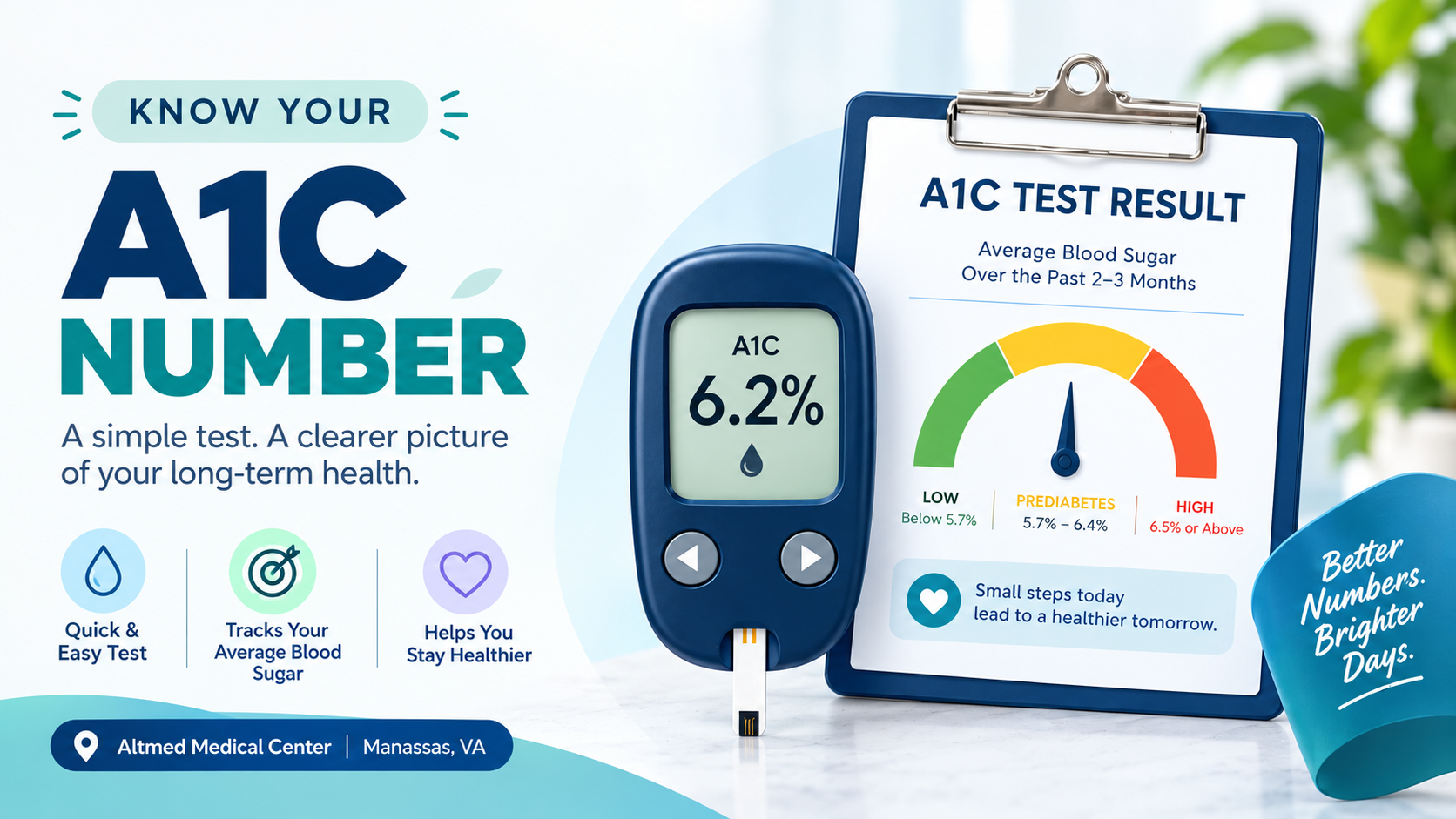
- An A1C of 5.7% to 6.4% falls in the prediabetes range. 6.5% or higher is in the diabetes range.
- About 8 in 10 adults with prediabetes don't know they have it, because it usually has no symptoms.
- Only a blood test can tell you. For many people, steady lifestyle changes can lower the risk of it progressing.
How common is prediabetes in Virginia?
More common than most people guess. The CDC now estimates that 115.2 million American adults have prediabetes, which is more than 2 in 5 adults. Closer to home, the Virginia Department of Health reports that more than 1 in 3 Virginia adults have prediabetes, more than 10% are already living with diabetes, and roughly 56,000 adults in the state are diagnosed with diabetes each year.
Here's the catch. Prediabetes doesn't hurt. There's no rash, no fever, nothing that sends you to a clinic. That's why most people only learn about it when a routine blood test at a physical flags it.
What do A1C and fasting glucose numbers mean?
Three common blood tests check for prediabetes, and each one has its own cutoffs. These are the ranges the American Diabetes Association uses:
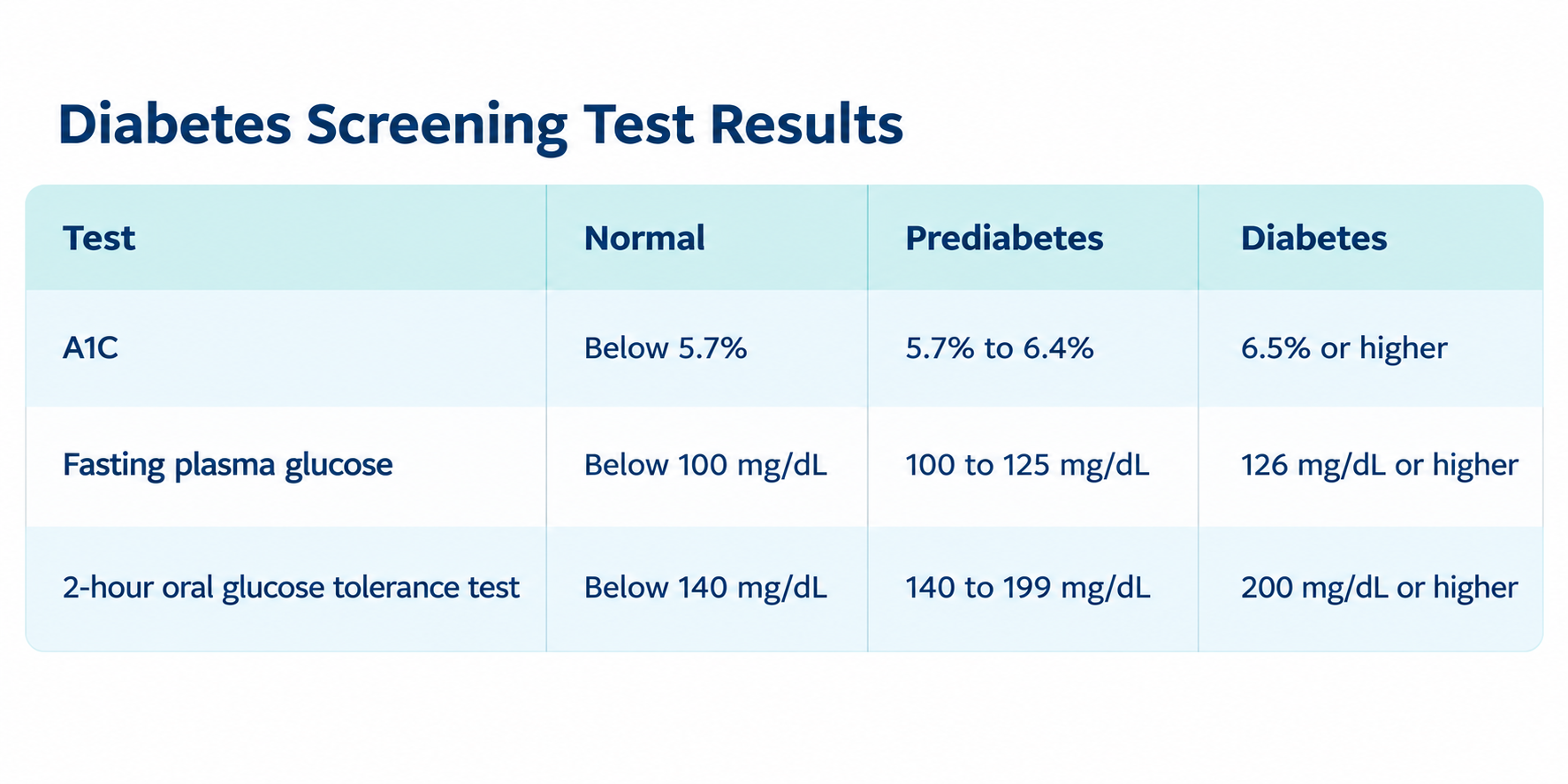
The A1C is the one most people see on a lab report. It reflects your average blood sugar over the past few months, and you don't have to fast for it. A fasting glucose test is different: you go at least eight hours with nothing but water, so it's usually drawn first thing in the morning. The glucose tolerance test checks your level before and two hours after you drink a sweet solution.
A single result in the prediabetes range isn't the whole story. Providers often repeat the test to confirm before calling it a diagnosis, and they'll look at the number next to your weight, blood pressure, family history, and other labs.
Who should get a prediabetes test?
The U.S. Preventive Services Task Force recommends screening adults ages 35 to 70 who are overweight or have obesity. That starting age used to be 40, and the Task Force lowered it in 2021. In its review, lifestyle programs that address both diet and activity were linked to a 22% drop in progression to diabetes.
Age and weight aren't the only signals. The CDC lists other risk factors worth mentioning to a provider:
- A parent or sibling with type 2 diabetes
- Being age 45 or older
- Being physically active fewer than 3 times a week
- Non-alcoholic fatty liver disease
- Gestational diabetes in a past pregnancy, or having given birth to a baby over 9 pounds
- Being African American, Hispanic or Latino, American Indian, or Alaska Native; some Pacific Islander and Asian American people also have higher risk
Not sure where you land? The CDC's free online Prediabetes Risk Test takes a couple of minutes. A score of 5 or higher suggests significant risk. It's a screening tool, though. Only a blood test can actually diagnose prediabetes.
Can you lower your risk after a prediabetes diagnosis?
Often, yes. This is the encouraging part, and it's backed by real data.
In the original Diabetes Prevention Program research, adults at high risk who joined a structured lifestyle program cut their risk of type 2 diabetes by 58%. Ten years later, participants were still about a third less likely to have developed it, and those who did were diagnosed about four years later on average. The CDC built the National Diabetes Prevention Program around that research. It runs for a year, not a few weeks.
What does that look like day to day? Usually modest changes you can keep up: more regular movement, smaller adjustments to what and how much you eat, better sleep, and some weight loss if your provider thinks it would help. Crash diets don't tend to last, and they aren't what the research measured.
Medication sometimes comes up too. Whether something like metformin makes sense depends on your family history, other health conditions, and your own goals, so it's a conversation to have with your provider rather than a default.
What happens at a prediabetes visit at Altmed?
AltMed Medical Center in Manassas, VA offers primary care that covers annual physicals, preventive screenings, and ongoing management of chronic conditions. For a blood sugar check, a visit usually goes something like this:
- A short conversation. Your provider asks about family history, medications, activity, and any symptoms.
- Blood work. AltMed's lab testing service handles the draw. Ask ahead whether your provider wants a fasting test so you can plan breakfast around it.
- Results and a plan. If your numbers fall in the prediabetes range, you'll talk through what they mean and set a follow-up date to recheck.
If weight is part of the picture, AltMed also runs a provider-supervised medical weight loss program. Not everyone is a fit, and your provider will screen you first, but it's an option to ask about. Some follow-up conversations, like going over results, may work through telehealth, which saves a trip on a busy weekday.
What to bring: a list of your current medications and supplements, any past lab results you have, your insurance card, and what you know about diabetes in your family. You can check accepted insurance plans before you come in.
When high blood sugar can't wait
Prediabetes itself rarely causes symptoms. Very high blood sugar is a different situation. Feeling unusually thirsty and urinating much more than normal are early signs worth getting checked soon, not months from now.
Some symptoms need emergency care right away. According to the CDC, call 911 or go to the ER if you or someone with diabetes has:
- Blood sugar that stays at 300 mg/dL or above
- Breath that smells fruity
- Vomiting and can't keep food or fluids down
- Trouble breathing
- Several signs of diabetic ketoacidosis at once, such as fast deep breathing, a flushed face, stomach pain, and extreme tiredness
A walk-in clinic isn't the right place for any of those. Go to the emergency room.
Ready to know your number?
If you're 35 or older, carry some extra weight, or have diabetes in the family, this November is a good month to get checked. You can book a visit online, walk in, or call AltMed at 703-361-4357. We're at 8551 Rixlew Lane, Suite 140 A, in Manassas. Questions before you come in? Reach the team through the contact page.
This article is for general education and isn't a substitute for advice from your own medical provider.
Care connected to this topic
Altmed Medical Center offers urgent care, primary care, occupational health, telehealth, and medical weight-loss services in Manassas. If this article matches what you are dealing with, our team can help you choose the right service.
Book Appointment